
When paper labels start failing – smearing, tearing, soaking, or wearing out long before your product or workflow does – it’s a sign you’ve outgrown paper altogether. That’s where poly labels come in. Poly labels are engineered for durability, moisture resistance, and long-term performance in environments where paper simply can’t survive. But not all poly labels are the same. The two most common types, polypropylene (PP) and polyester (PET), each bring different strengths depending on how (and where) they’re used. Here’s how to choose the right one for your operation.
Polypropylene Labels (PP)
Polypropylene labels are flexible, tough, and incredibly versatile. They strike a balance between durability and affordability, making them a go-to choice for everyday industrial and consumer products. Think of PP as the “step up” from paper, stronger, more water-resistant, and built for cleaner, longer-lasting print results.
Where They Work Best
- Product labeling
- Bottles, jars, cosmetics
- Light industrial environments
- Refrigerated items
- Flexible or curved packaging
Why They Work
- More durable than paper
- Moisture and water resistant
- Cost-effective for high-volume applications
- Flexible enough to wrap around curves
- Excellent print clarity with thermal transfer
When They Struggle
- Not ideal for high heat
- Less chemical resistant than polyester
If you need a durable, affordable label for general industrial or consumer use, PP is often the right fit.
Polyester Labels (PET)
Polyester labels are what you turn to when the environment is harsh, the stakes are high, or the label simply must last. They resist heat, chemicals, abrasion, and outdoor exposure better than almost any other label material. PET is the material you choose when failure is not an option.
Where They Work Best
- Asset tags
- Equipment labeling
- Outdoor or harsh environments
- Chemical exposure
- Long-term traceability and compliance
Why They Work
- Superior durability
- High heat resistance
- Strong chemical resistance
- Won’t tear, stretch, or distort
- Long-term performance in harsh conditions
When They Struggle
- More expensive
- Less flexible on curved surfaces
If your labels face long-term wear, friction, or exposure to heat or chemicals, PET is the premium choice.
PP vs PET: A Quick Comparison
- PP = Durable, affordable, flexible
- PET = Extremely durable, heat and chemical resistant
If PP is the lightweight boxer that can go 10 rounds, PET is the heavyweight champion that can take (and deliver) a beating.
Choosing the Right Poly Label
The right choice depends on more than just the material. Storage conditions, surface type, application temperature, chemical exposure, and even the ribbon you pair with the label all affect performance. Here are a few starter questions:
- Will the label face heat, chemicals, or abrasion
- Is the surface rigid or curved
- Does the label need to last months or years
- Will you apply it in cold, hot, or humid conditions
Just like freezer-grade labels require the right adhesive and construction, poly labels perform best when the entire system – face stock, adhesive, ribbon, and environment – is matched correctly.
How Industrial Imaging Products Helps
Choosing poly labels shouldn’t be guesswork. At Industrial Imaging Products, we make sure your labels survive the real world, not just the spec sheet. We offer:
- Application analysis
- Material recommendations
- Adhesive selection tailored to your surfaces and temperatures
- Ribbon matching to ensure crisp, durable barcodes
- Real-world testing in your environment
- Long-term consistency for repeat orders
Because labels aren’t just stickers. They’re traceability, compliance, safety, and brand integrity. And choosing the right poly label can save you downtime, reprints, and operational headaches.
Next Month: We’ll dive into Chemical-Resistant Labels: when you need them, what makes them different, and how to avoid overpaying for durability you don’t actually need.
Recent Posts
Mar 23rd 2026
Don’t Waste Q2: The Most Underrated Quarter in AIDC and Warehouse Operations
Mar 9th 2026
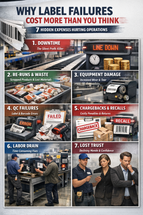
Why Label Failures Cost More Than You Think: 7 Hidden Expenses Ops Teams Overlook
Feb 3rd 2026