
A rugged Android handheld is built to take a beating. Six-foot drop to concrete, sealed against dust and water, a scan engine that fires tens of thousands of times a shift in a freezer or a wash-down bay. The hardware is engineered for a long physical life on the floor. What takes a handheld fleet out of service first is almost never the drop; more often it is the repair and parts model standing behind it.
Start with the part operators feel most. In a 200-device fleet a few units are always down at any given moment, and the math only works if you can cycle them back into service fast. The legacy model says ship the dead unit to a depot, wait in a national repair queue, and get a refurbished replacement back. The published standard for an out-of-contract repair is ten business days, and that clock starts only when the unit reaches the depot, before freight in either direction. A device shipped Monday can realistically be back the following week or later. Advance-exchange programs exist to soften that, but they are priced as a premium and the swap is often slower than the contract implies.
Then there is what comes back. The depot model is built around board swaps and refurbished stock, not around fixing the specific fault in front of a technician, so a handheld with an intermittent imager or a flaky charging contact can make two or three round trips for the same problem. The "no fault found" return is its own special frustration: the unit fails on your line, passes on their bench, ships back, and fails again on Monday. Each loop is another week a worker is improvising around a hole in the rotation.
The wear parts tell the same story. A handheld is a bundle of consumable surfaces: scan windows that haze and scratch, triggers and keypads that wear out under a million presses, charging contacts that pit, hand straps and cradles that take abuse no spec sheet measures. Batteries belong here too, degrading on a predictable curve and burning through fast on a two-shift operation. When the genuine part is on allocation and the third-party equivalent voids your coverage, you are stuck choosing between downtime and your warranty. It only gets worse as the model ages: the manufacturer sets the platform's end-of-life date on its own calendar, and once a unit is sunset the spares dry up entirely. A fleet that is mechanically sound gets pushed toward a refresh because the scan windows and batteries to keep it running are no longer made. The body still works. The parts pipeline behind it closed first.
Underneath all of it sits the support line, where the frustration sharpens into something personal. Tier-one reads from a script. You describe the same intermittent fault for the third time to someone who has never stood in a building like yours or watched what label dust and forklift traffic do to a scan window after eight months. The knowledge that would diagnose the problem on the first call lives in the field. The person answering the phone does not!
None of this is a verdict on the hardware. The rugged handhelds coming off these production lines are genuinely impressive machines! The point is narrower and, for anyone managing a fleet, more useful: the spec sheet measures the device, and the device is rarely what fails you. What fails you is the repair turnaround when one goes dark, the lead time on a scan window or a battery, and how long the parts pipeline stays open after you buy.
So the question worth asking before the next fleet purchase has nothing to do with the drop rating. Pull the service agreement and find the lines that govern the bad day. How long until a working replacement is in a worker's hand, not just a ticket opened? What is the committed advance-exchange turnaround? How many years are spare parts guaranteed once the model is retired?
Recent Posts
Sep 30th 2026
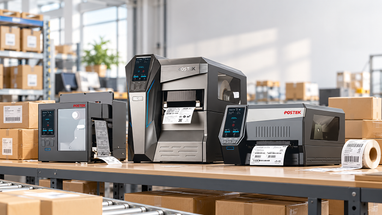
POSTEK Industrial Printers Now Available at the Ganson Store

Sep 17th 2026
Built for the Real World: Inside Newland’s Approach to Industrial Barcode Scanning

Sep 14th 2026