
In the world of thermal printing and automatic identification and data capture (AIDC), few topics generate as much consistent debate as the choice between original equipment manufacturer (OEM) consumables and compatible alternatives. For many organizations, the decision is often made out of habit rather than analysis, with OEM products viewed as the default standard and compatible options treated with skepticism.
This binary way of thinking, however, oversimplifies a far more nuanced reality. The true determinant of performance is not the label on the packaging, but the alignment between the consumable and the operational environment in which it is used.
OEM consumables, produced by manufacturers such as Zebra, Honeywell, Sato, and Toshiba, are designed to meet the general specifications of their respective printers. Compatible consumables, by contrast, are engineered by third-party manufacturers to match or exceed those same specifications, often with additional flexibility in materials and application-specific design.
The assumption that OEM products inherently deliver superior performance is one of the most persistent misconceptions in the industry. While OEM materials are typically reliable, they are not universally optimized for every use case. In practice, many operations utilizing OEM labels and ribbons still encounter issues such as inconsistent print quality, premature printhead wear, image smudging, and barcode scan failures. These challenges rarely stem from the origin of the product, but rather from a mismatch between the material and the demands of the application.
High-quality compatible consumables, when sourced from reputable manufacturers, can offer meaningful advantages in this regard. Because these products are often developed with specific use cases in mind, they can be tailored to perform in environments that place unique demands on labeling systems. This includes applications involving extreme temperatures, exposure to chemicals or abrasion, or the need for high-resolution barcode printing. In such scenarios, compatible solutions may not only match OEM performance but exceed it. Additionally, organizations may benefit from improved lead times, greater supply chain flexibility, and reduced overall costs.
That said, it would be equally inaccurate to suggest that compatible consumables are always the preferred choice. There remain circumstances in which OEM products are the most appropriate solution. Highly specialized or proprietary applications, for example, may require OEM materials to ensure compatibility and compliance. Similarly, newly deployed equipment operating under strict warranty conditions may necessitate the use of OEM consumables to mitigate risk. In these cases, the priority is not cost reduction, but operational certainty.
Recent Posts
Sep 30th 2026
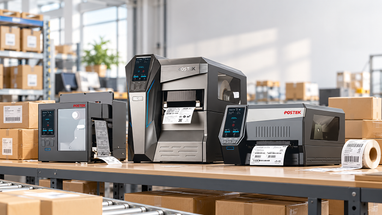
POSTEK Industrial Printers Now Available at the Ganson Store
Sep 17th 2026
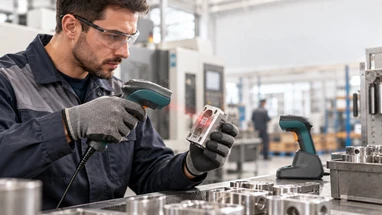
Built for the Real World: Inside Newland’s Approach to Industrial Barcode Scanning

Sep 14th 2026